You raised prices ten percent and the bank balance did not move
You did what the usual advice says. Last year you raised prices ten percent, and you expected the bank account to show it. At month end the business's finances look about the same as before.
That is a strange place to be, because everyone told you price was the fix. Price increases are the standard answer when a shop is busy and still short on cash.
Here is our position, and it is ours, not a measured finding. A ten percent rise only touches the half of the day the shop bills. Before you raise prices again, find the right lever.
We are not saying your prices are wrong. We are saying a price rise answers a different problem, and the rest of this article shows which one.
Your ten percent only touched the hours customers pay for
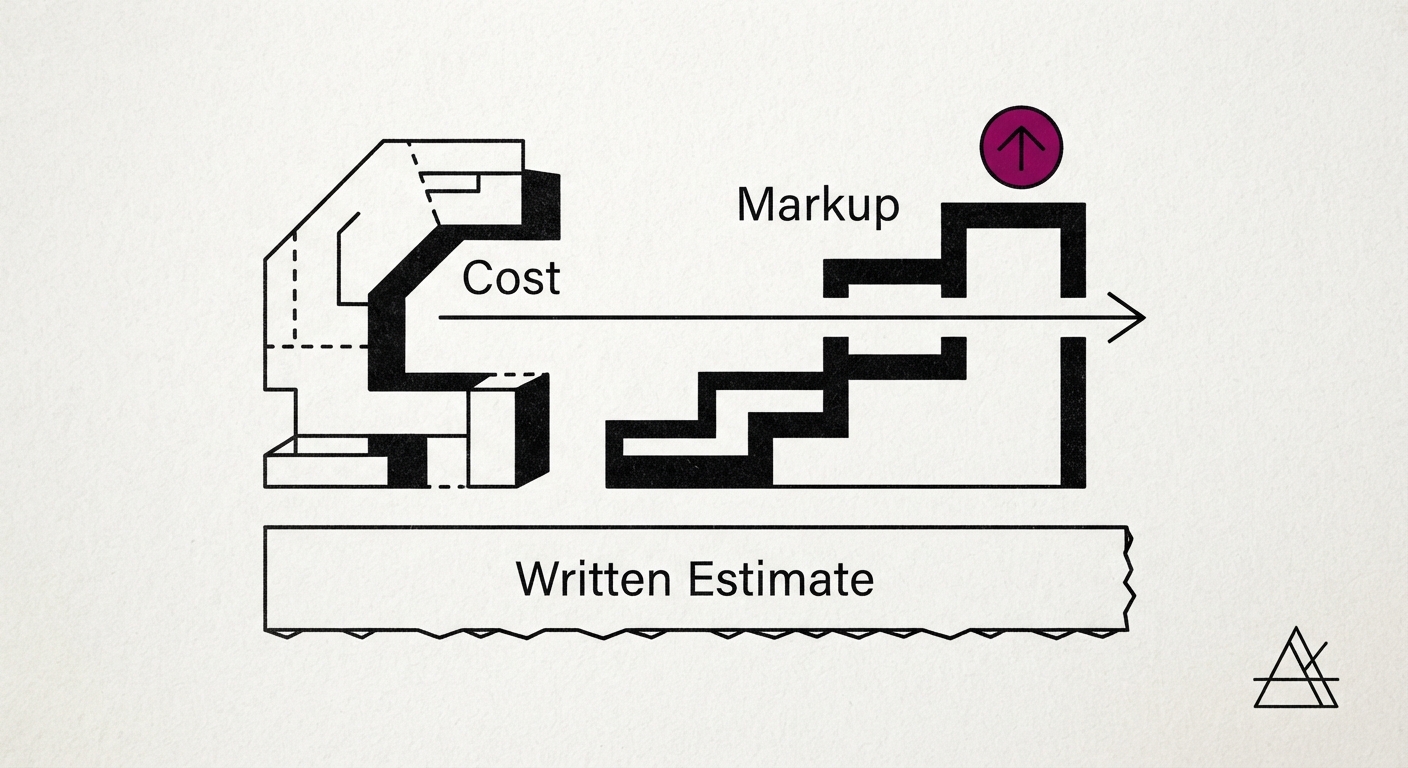
Every day, the shop pays a technician for the full day. The customer pays only for the hours that appear on his bill. The rest was paid for, and nobody paid the shop back.
When you raised prices, the raise went onto the hours customers pay for. The other hours cost exactly what they cost before. The same technician was on the clock, at the same rate, whether the truck was parked in a driveway or stuck on the road.
We say about half the day only as a round picture of how an owner might see it. The figure this article relies on comes in its own section below, and we do not claim that most shops bill half their day.
Every day, the shop pays a technician for the full day.
Why raising prices feels like the obvious answer right now
Costs are rising across the HVAC industry, and the trade press says so. ACHR News reported on 17 April 2026, from the Bureau of Labor Statistics' preliminary producer price data for March, that the index for air-conditioning, refrigeration and forced air heating equipment manufacturing rose 0.3 percent in the month and was up 5.24 percent from March 2025. The same article put aluminum mill shapes up 34.1 percent, copper and brass mill shapes up 21.3 percent and steel mill products up 15.4 percent over twelve months. It attributed the rises to tariffs, metal and energy costs and global uncertainty, and said contractors can expect continued price increases from manufacturers and adjustments from distributors. It also noted that shipment data from the industry association AHRI show declines in nearly every equipment type, partly because strong growth in late 2024 and early 2025 was driven by refrigerant transitions.
An earlier ACHR News roundup of HVAC price increase notices from equipment and parts makers, published on 17 November 2025, found most of them in the low to mid single digits. The exceptions were a 12 percent increase from Tecumseh and a tariff pass-through on select Fieldpiece products.
Two limits. A producer price index measures what manufacturers charge, not what your shop pays its distributor, and mill shapes are inputs to manufacturers, not to contractors. And both articles report their own period; neither is a forecast.
So when HVAC equipment prices and materials cost your shop more, an HVAC price rise is a reasonable response, and this article does not say otherwise. It says the rise only reaches the hours a customer is billed for, and the other hours still cost what they cost, so a rise should not be the only lever you pull.
Why the ten percent rise did not show up at month end
Start with the usual advice, because it is reasonable. If the shop is busy and broke, the story goes, prices are too low. Build a price book with real profit at every price, stick to it, then raise it again. Our HVAC pricing guide for contractors covers how a price book is put together.
The advice leaves one thing out. A price is tied to a job, and every job on a bill got the raise. But part of a technician's day is on no bill at all: the drive across town, the wait at the supply house, the callback, the diagnosis the customer said no to. No job carries those hours, so no price can carry them.
That is an owner's account of how a day goes, and we say so. The research found no published split of where unbilled hours go. The one exception is about 1.13 hours a day of unrecovered driving in a Field Promax report covered by ACHR News on 16 June 2026.
A flat-rate price also assumes the job takes the hours it assumes. LevelCFO's Contractor Benchmarks 2026 measured actual hours against budgeted hours on 315,393 jobs from 1,391 companies. The median job lands on budget, at 99.4 percent. The mean is 119 percent, 40 percent of jobs exceed their hour budget, and 18.3 percent exceed it by half again.
Read that carefully. It measures hours, not dollars. LevelCFO itself warns that scope changes and missing estimate hours can look like execution failure. And it does not give a trade breakdown, so we say contractors, not HVAC shops, even though the page lists HVAC alongside plumbing, electrical, mechanical, refrigeration and fire protection.
So a price built on assumed hours can miss in a second way. The price carries the hours the book assumed, not the hours the crew spent.
A price is tied to a job, and every job on a bill got the raise.
Pricing is a multiplier, and it cannot multiply an hour you never invoiced
Our position is that raising prices before fixing what is leaking is the wrong order.
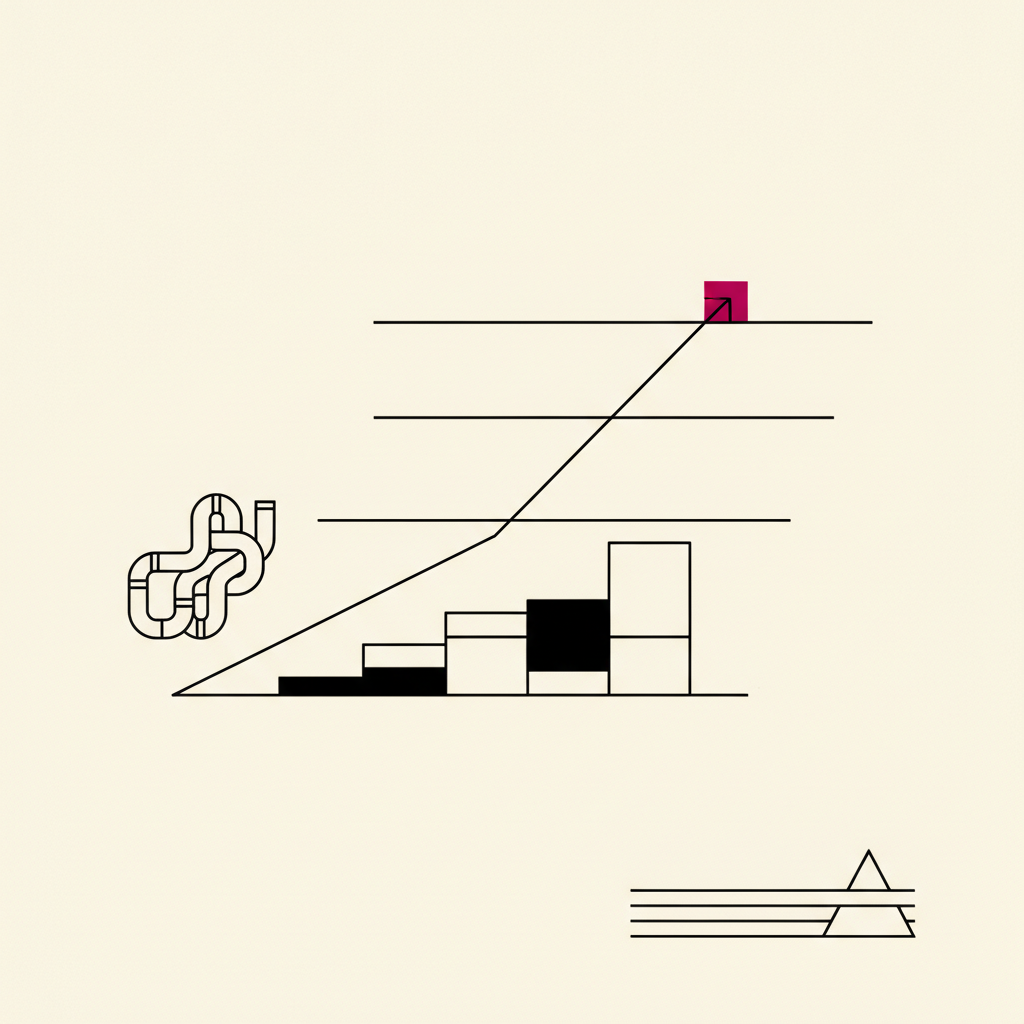
A ten percent rise lifts the revenue on the hours that are billed. It does nothing about what the unbilled hours cost, because the pay for those hours does not change. Pricing is a multiplier, and it cannot multiply an hour that was never invoiced.
The extra revenue from a price rise is not lost. It lifts the billed hours in full. What a price rise does not do is reduce the cost of the hours that are paid for and not billed.
Pricing is a multiplier, and it cannot multiply an hour that was never invoiced.
What 300 HVAC companies show about where the ten percent landed
The Field Promax report mentioned above is the figure this article relies on. Field Promax, a software company for HVAC shops, reported in a study covered by ACHR News on 16 June 2026 that the average technician workday is 8.8 paid hours. An average of 5.7 hours a day can be considered billable. The report covered 300 HVAC companies and more than 10,000 data points.
Two limits matter. The article does not state the period the data covers. And Field Promax sells software to this trade, which is worth knowing about any vendor's numbers.
Now the division, which is ours and is plain arithmetic on the two published figures. 5.7 divided by 8.8 is about 65 percent, so the average technician in that report is paid for about two thirds of the hours the shop buys.
A price rise lifted the revenue on the 5.7 hours. The payroll for all 8.8 hours stayed the same. About a third of the paid day, about 3.1 hours, still costs full pay and earns nothing. That third was never in the raise's reach.
The report gives no breakdown by shop size or trade mix inside HVAC. So we say the average technician in this report, not most shops. For the fuller treatment of these figures, and of ServiceTitan's table of billed share against margin, see busy all day, broke all month.
About a third of the paid day, about 3.1 hours, still costs full pay and earns nothing.
Two reports, both right: the price book and the P&L
It feels like a contradiction. The price book says every job makes money. The P&L says the business barely does.
Both are right. The price book sees only the hours that are on the bill. The P&L pays for every hour, billed or not. The gap between them is the part of the day nobody paid the shop for.
For that reason, a price calculator can show a healthy margin on every job while the P&L is thin. Nothing is wrong with the calculator. It was never shown the unbilled hours, so it cannot count them. The homeowner sees the same single number on a quote for a replacement HVAC system or a heat pump upgrade, and never sees the hours behind it either.
We state no margin figure here, because the point is the gap between the two reports, not how wide it is in anybody's shop. For how flat-rate price books are built, see flat rate pricing, price books, and markup strategies.
The price book sees only the hours that are on the bill.
Where we have read a business's records this way before
Before Anchorfield, our founder built the operating software for an import business with thirty store locations. Every money number was in its QuickBooks file. What nobody could see was how goods moved between the stores and the customer, and the two sides did not match.
He mapped the movement and matched it back to the books and the P&L. It is the same job here: the price book and the P&L, next to each other.
To say it plainly: we have built ERP software for an import business, a more complex operation than a home services company, so reading a business's records end to end is not new to us. We say nothing about results, and nothing about any audit finding.
A fifteen-minute check you can run tonight
You need two reports you already have. First, last month's P&L: find revenue, and find field payroll under cost of goods sold.
Second, the hours report. In ServiceTitan it is the technician performance report, and in Housecall Pro it is the employee time report. Pull it for last month, all trucks, and find the hours sent out and the hours billed. Confirm the exact report names in your own account, since menus and names change.
Then do three sums.
Sum one is what the raise brought in. Take about ten percent of last month's revenue. Last month's revenue may already include the raise, so treat the answer as approximate.
Sum two is what the unbilled hours cost. Hours sent out minus hours billed gives the unbilled hours. Payroll divided by hours sent out is what the shop pays for one hour. Multiply the two.
Sum three is what fixing a piece of the leak is worth. Take one of every four unbilled hours. Take revenue divided by hours billed as what a customer pays for one hour, and multiply the two.
Here is a worked illustration, and it is hypothetical, with round numbers. Say last month's revenue was $60,000. About ten percent of it, $6,000, is what the raise added.
Say the shop bought a thousand hours and billed six hundred, so four hundred hours went unbilled. Payroll of $30,000 over a thousand hours is $30 an hour, so the unbilled hours cost 400 times $30, or $12,000.
Now bill one of those four hundred hours in four, which is a hundred hours. A customer pays about $100 for a billed hour ($60,000 over 600), so a hundred hours is $10,000. A thousand paid hours is 125 eight-hour days, so a hundred hours is about 0.8 of an hour per technician-day. That is under an hour a day.
Put the three side by side: $6,000 from the raise, $12,000 lost in hours nobody billed, and $10,000 back from fixing one hour in four with no price rise. That is the illustration's result, not a forecast for your shop. Revenue per billed hour includes parts, so use your own numbers.
If you want to see where the hours go, pick one technician and one day last month. Write down where every hour went: on a bill, driving, waiting at the supply house, a callback, or a diagnosis the customer said no to. Add up each pile. The biggest pile that is not on a bill is where to start. This is a way to look, not a measured split.
When price really does come first
If your billed-hours number comes back high, the usual advice is right. Say your technicians bill seven hours of every eight. That is 87 percent. ServiceTitan's HVAC Profit Margins table calls 85 percent and above excellent, with net margin of 18 to 25 percent. The table states no sample and no year, so treat it as a rule of thumb from a vendor, not a study.
In that case the shop's engine is clean, and if it is still broke, the price book is the leak.
That is especially true if the price book is five years old. It sends the crews out to pay today's copper and today's wages at yesterday's price. That shop should rebuild the book line by line, and there price comes first. Our own article on how to price a plumbing job shows how to build a price from loaded hourly cost, and the method carries over.
Our view is that most shops that run this check will not come back that high. That is our view, not a finding. You will know for sure after fifteen minutes with two reports.
Our view is that most shops that run this check will not come back that high.
Key Takeaways
A ten percent price rise lifts the revenue on the hours a customer is billed for, and does nothing about what the unbilled hours cost.
In the Field Promax report covered by ACHR News, the average technician is paid for 8.8 hours a day and has 5.7 of them considered billable. That is about 65 percent, which leaves about 3.1 paid hours a day that earn nothing. The report does not state its period, and Field Promax sells software to this trade.
A price book and a P&L can both be right at once. The price book sees only billed hours, and the P&L pays for every hour.
The fifteen-minute check uses last month's P&L and the hours report you already have. The worked example in this article is hypothetical: $6,000 from a raise, $12,000 lost in unbilled hours, and $10,000 from billing one more hour in four. It is not a forecast for any shop.
Price comes first when your technicians already bill most of their paid hours, or when the price book is old enough that it no longer covers today's costs. Our view is that most shops that run the check will not come back that high.
A free report, if you would rather not run the check yourself
If you would rather not run this check yourself, Anchorfield offers a free report, the GAP Integrity Report. It reads your company's public reviews and website for possible gaps, puts a dollar figure on a gap where there is a basis to estimate one, and gives you checks to run and a 90-day plan your team can work on together. It is for HVAC, plumbing and electrical owners doing $2 million a year or more in sales.
Anchorfield's audit is a read of a company's own records. No audit has been delivered to a home services company yet, so this article makes no claim about what audits find.
Before you touch the price book, know how many of your paid hours are billed. Ask for a diagnosis before a pitch: a sales pitch is not a diagnosis. That page explains what the free report looks at and lets you check whether you qualify.
What it costs if the audit finds nothing
The revenue audit is meant to find where money can be recovered into your P&L, and to say how much, in dollars. If it finds nothing, you do not pay for it. That is our offer, and it is not a promise about what any audit will find.
You already know something is wrong.
Ninety seconds will tell you how big it usually is.