What an HVAC Business Broker Actually Does
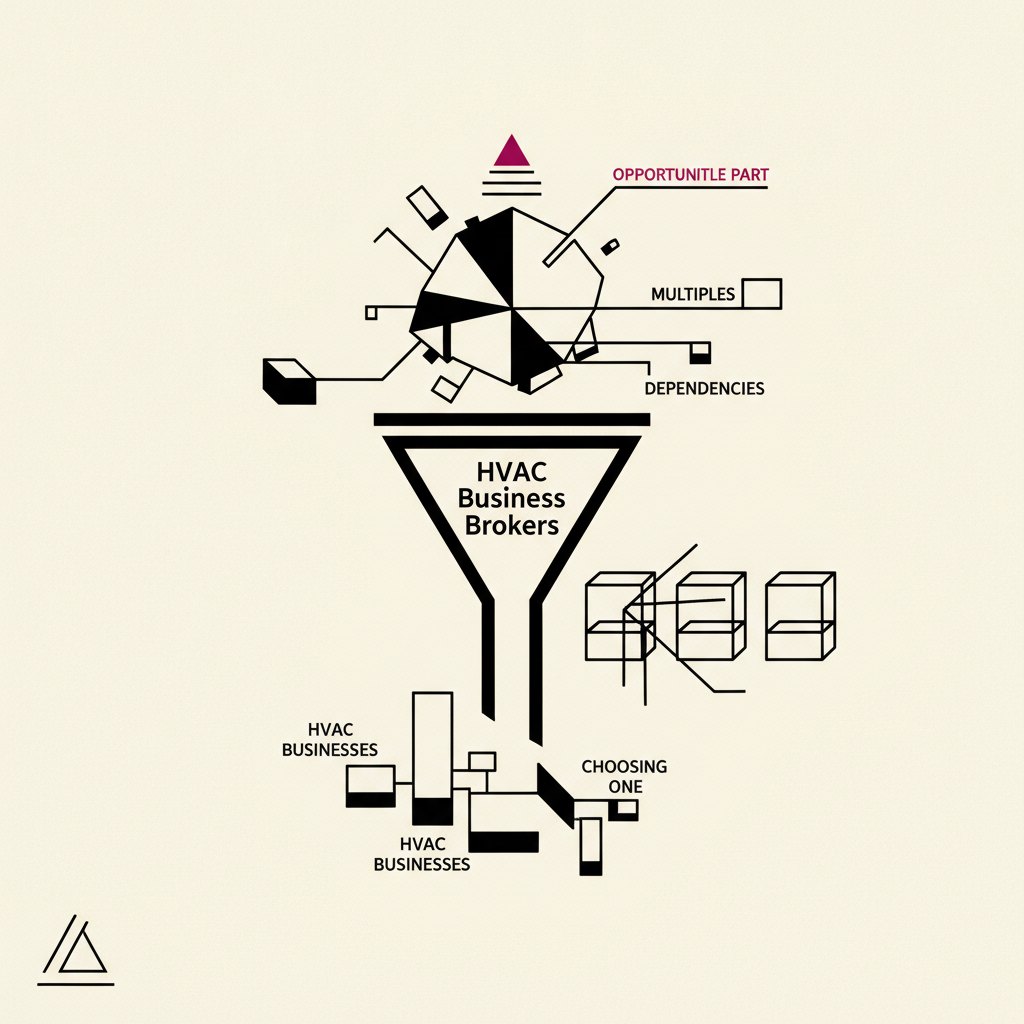
An hvac business broker works for the seller. He takes the company to market, finds and screens prospective buyers, and steers the deal from the first phone call through to the closing table. If you're the one selling, he is your representative in the room, not a neutral party splitting the difference between you and the buyer.
Most brokers get paid on a success-fee basis: nothing upfront, a percentage when the deal actually closes. The exact rate varies deal to deal and broker to broker enough that quoting a single number here would be guessing. Treat any broker's fee structure as something to negotiate on its own terms, not something you can assume in advance.
A broker is not the same thing as an advisor. Brokers typically handle main-street-size businesses, the range most $2-20M HVAC companies fall into, while advisors and investment bankers step in on larger, more complex transactions with layered financing or multiple stakeholders. Knowing which one you actually need is the first decision, before you ever compare fee structures or track records for your hvac business.
Most hvac business owners who reach out to a broker already have a specific number and a specific timeline in mind, not an abstract question about how selling works. A broker who specializes in the trade, rather than a general business advisors firm that takes an HVAC listing occasionally, is the one who can tell you early whether that number is realistic before you go to market.
If you're the one selling, he is your representative in the room, not a neutral party splitting the difference between you and the buyer.
Why Valuation Multiples Vary So Much From Shop to Shop
There is no single hvac business valuation multiple that applies to every company in the trade, and any broker who quotes you one on a first call without asking a question is quoting blind. The multiple that ends up on your business is a moving target set by how much of your revenue is recurring maintenance work versus one-off calls, how efficiently your labor is deployed, and how concentrated your customer base is.
Two companies in the hvac industry doing the same revenue can land on genuinely different multiples. The gap usually comes down to accounting quality, whether a buyer can trust the numbers without weeks of forensic digging, and how dependent the business is on the owner personally. A shop that runs without you in the truck every day is worth more than one that stops working the day you stop showing up.
Anchorfield does not publish or claim a specific multiple for any owner's business, and we won't pretend a blog post can tell you what your business is worth. An accurate hvac company valuation requires an actual valuation from a qualified advisor who has looked at your books, not an estimate pulled from an industry-wide average. Valuing your business isn't something this article, or any article, can do for you.
There is no single hvac business valuation multiple that applies to every company in the trade, and any broker who quotes you one on a first call without asking a question is quoting blind.
The Sale Process: From First Call to Closing
Once you understand why your multiple isn't fixed, the next question in any hvac business sale is how it actually unfolds once you've signed with someone to run it. A broker-run business sale generally moves through the same sequence regardless of who's running it: confidential listing, buyer qualification, due diligence, negotiation, and closing. Each stage narrows the field. You go from a wide pool of possible buyers to a short list of qualified ones, then down to the one who actually signs.
Confidentiality matters more in this trade than owners sometimes expect. If your techs or your best commercial customers get wind that the business is for sale before anything is signed, the reaction alone can hurt the thing you're trying to sell. A tech starts job-hunting. A customer starts wondering who to call next year. A broker keeps the listing confidential precisely to avoid that. A confidential hvac sale protects the relationships that keep the business running while it's being sold, and a confidential business listing is the standard, not the exception, for a reason.
Due diligence on an HVAC company digs into the financial records first, but it doesn't stop there. A buyer's team will also look at fleet condition, license and certification status for every jurisdiction you operate in, and how much of your revenue sits in service-contract customers versus one-off jobs. The buyer and seller rarely agree on price until this stage is finished, because this is where the buyer's assumptions get tested against your actual numbers.
A confidential hvac sale protects the relationships that keep the business running while it's being sold, and a confidential business listing is the standard, not the exception, for a reason.
Broker-Run Sale vs. Selling Directly to a Private Equity Roll-up
That sequence describes what happens when a broker runs the sale. It isn't the only path a seller can take. A broker-run sale and a direct sale to a private equity consolidator are genuinely different paths, not two flavors of the same process. A broker runs a competitive process, multiple buyers bidding against each other for your business. Selling directly to a PE-backed roll-up skips that competition entirely.
What you get in exchange is speed. A private equity group already assembling a roll-up in your region often has capital committed and a playbook ready, so it can move to close faster than a market process that has to find and qualify buyers from scratch. The acquisition itself can close in weeks once terms are agreed, compared to the months a broker-run process can take. But faster is not automatically better. It optimizes for a different thing than a competitive process does, and a qualified buyer moving fast is still negotiating for the lowest price he can get away with.
How a PE consolidator actually structures its due diligence and its offer is a different set of questions than what a broker does, and it's worth understanding before you take a call from one. This is the mergers and acquisitions side of a sale that most owners never see up close until it's their own deal. We cover that in the companion piece on private equity consolidation, roll-ups, and acquisition due diligence.
But faster is not automatically better.
Choosing a Broker Who Understands HVAC, Not Just Small Business
If you decide a broker is the right path, the next problem is finding one who actually knows this trade rather than one who happens to sell small businesses. Ask any broker you're considering how many HVAC or home services deals he's closed in the past two years specifically, not his total lifetime count across every industry he's ever touched. A broker who did three restaurant sales and one HVAC deal five years ago is not the experienced hvac business broker his marketing implies.
Ask for references from sellers in a similar revenue band, meaning $2-20M, not a general reference list padded with businesses a tenth your size. A broker who's only ever sold $500K shops doesn't know what your buyer pool looks like or what they'll push back on. There's no shortage of people who list themselves among the hvac brokers turning up in a search; the way to tell the real ones apart is what they ask before they quote a number.
The tell of an experienced broker who actually understands the trade is what he asks before he quotes any range. He'll want to know your license structure, your fleet age, and what share of revenue sits in recurring maintenance contracts. A broker who skips straight to a number without asking any of that is guessing, and you're the one who pays for his guess. When you hire a broker, you're hiring the person responsible for finding the right buyer, not just anybody willing to write a check.
The tell of an experienced broker who actually understands the trade is what he asks before he quotes any range.
Getting the Business Ready Before You Talk to a Broker
Whatever broker you eventually choose, there's work worth doing before that first call. Clean financials and a documented, non-concentrated customer base do concrete work for you before a broker ever gets involved: they reduce a buyer's perceived risk, and lower perceived risk supports a stronger asking price, which is where the final sale price usually starts from.
If you're ready to sell an HVAC business, or even just starting to think about it, the work looks the same either way: clean up what a buyer will actually check before you try to market your business. Waiting until you're actively looking to sell your HVAC business before touching your financials means you're trying to sell your business and fix it at the same time, and that rarely goes well on a buyer's deadline.
An owner who fixes clear operational weak points before going to market negotiates from a genuinely stronger position than one who lists the business as-is and hopes nobody notices. The weak points a buyer's due diligence will eventually find, thin documentation, one customer carrying too much revenue, a fleet nobody's tracked maintenance on, are the same ones you can fix now, on your own timeline, instead of under a buyer's deadline. Fixing them is also how you maximize the value of the business before anyone else is at the table negotiating over it.
Anchorfield's audit reviews the operational and financial pattern of a home services business, the same pattern that shows up across service businesses and service companies well beyond HVAC, and the same one a buyer's due diligence will eventually find anyway, just months or years earlier and without a deal hanging on the outcome. Most hvac business owners never look this closely at their own numbers until a buyer asks. If you're weighing a sale in the next few years, you can book a discovery call to see whether that applies to your shop.
An owner who fixes clear operational weak points before going to market negotiates from a genuinely stronger position than one who lists the business as-is and hopes nobody notices.
Key Takeaways
HVAC valuation multiples vary with recurring revenue share, labor efficiency, and customer concentration. There is no single multiple that applies across the industry.
A business broker runs a competitive process across multiple buyers; selling directly to a private equity consolidator trades that competition for speed, not automatically for a better price.
Confidentiality during a sale process protects the business from employee and customer reaction before any deal closes.
Due diligence on an HVAC company typically covers financials, fleet condition, licensing, and the mix of contract versus one-off revenue.
Vetting a broker on recent, trade-specific deal experience matters more than his total lifetime deal count.
Fixing clear operational and financial weak points before talking to a broker puts a seller in a stronger negotiating position than listing the business as-is.
You already know something is wrong.
Ninety seconds will tell you how big it usually is.